
Font Size:

SCI REMC vegetation management crews will be performing trimming in the Carp and Ellettsville area this fall. Please stay a few hundred feet back from crews and activity. Cleanup follows each phase and may continue for a few weeks due to the amount of debris. For more information, see our FAQ below or call (765) 352-4717 with specific questions.

To help ensure timely notification, members are encouraged to keep their contact information up to date. SCI REMC will make every effort to notify members before work is performed on their property.
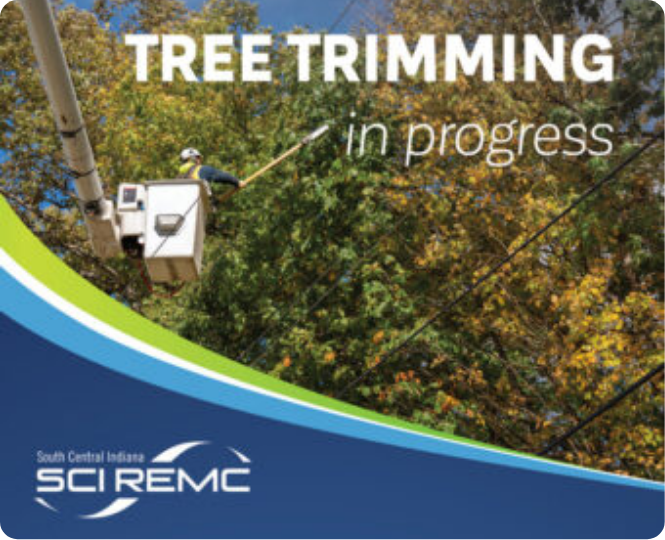
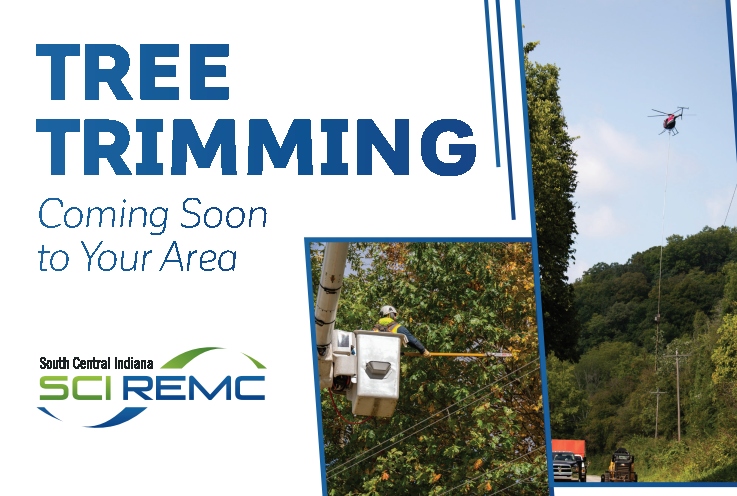
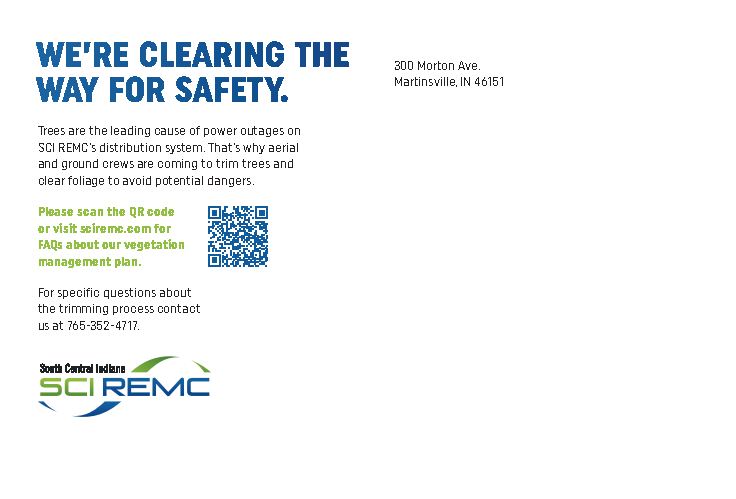
Members will receive a postcard or a bill insert before work begins in their area. Please ensure we have your accurate contact information on file so we can keep you informed.
We appreciate your cooperation as crews complete this important work to support a safer, more reliable electric system.
Maintaining electric lines alongside beautiful old groves of maple, oak, and ash is not an easy job.
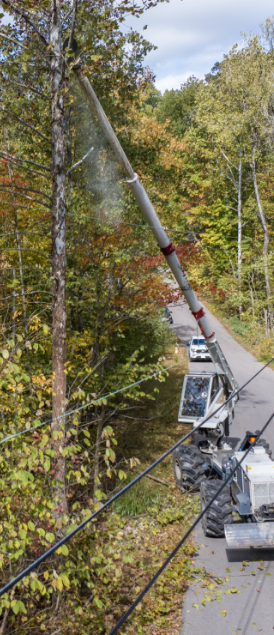

A strong wind can turn a scenic front yard into an electrical disaster when trees and lines are not properly maintained.

Tree trimming is a necessary part of providing electric service to your home or business.

Without proper trimming, trees can impact power lines, increasing outages and restoration costs.

Trees are part of nature we all value, which is why SCI employs several certified arborists on its Vegetation Management team.
We trim trees and other vegetation to help maintain reliable electric service. Trees that grow too close to power lines can cause outages, especially during storms. Regular trimming helps reduce outages, safety risks and damage to our equipment.
Traditional trimming is done by crews on the ground using bucket trucks, chainsaws, and other tools to safely clear vegetation around power lines. Aerial trimming uses a helicopter equipped with a saw attachment suspended beneath it to trim trees along distribution rights-of-way or in areas difficult to reach from the ground.
Yes. Members are notified before both traditional and aerial vegetation management work begins in their area. Notification is provided through postcards and bill notices. To ensure you receive updates, please make sure your contact information is current.
Aerial trimming is faster and more efficient in hard-to-access areas, such as rural, hilly, or swampy terrain. It allows crews to safely clear many miles of right-of-way in a short time, helping reduce outages and improve reliability.
Safety is our top priority. Pilots are trained and certified in utility vegetation management, and aerial saws are used only in controlled areas. Flight paths are carefully planned to ensure the safety of people, animals, and property.
During aerial trimming, any brush that falls onto access roads, maintained yards, agricultural fields, or into streams will be moved to nearby wooded areas by a ground crew to be cleaned up later.
Crews will also pile debris for pickup once trimming is complete and address any dead or hazardous trees they find in the right of way. For traditional trimming, debris is typically chipped or removed.
Cleanup follows each phase of work. We appreciate your understanding as crews work in your area.
Trimming is performed by a combination of SCI team members and contract crews. All crews are trained and certified in utility line clearance to ensure safety and reliability. Aerial trimming is conducted by specialized contractors working under cooperative supervision.
Yes. If you see a tree growing too close to power lines or one that appears to pose a risk, please contact us by emailing us at askus@sciremc.com. Please include your service address and account number, if applicable.
Property owners can put themselves at serious risk by trying to trim or remove trees near energized lines. The safest and best approach is to avoid attempting any work yourself.
Please note: Property owners who cut or trim trees and cause damage to SCI REMC facilities will be billed for repairs.
When planting trees, always consider their mature height and distance from power lines. Choose low-growing species for areas near overhead lines. Our team can provide guidance on planting the right tree in the right place.

Learn more about our trimming processes and watch videos.

Contact us if you have questions or feedback.
We appreciate your cooperation while we complete this important work to help keep your power safer and more reliable!
I still have questions. How do I contact you?
We’re happy to help. You can submit your questions by:

Emailing us at askus@sciremc.com or
Calling (765) 342-3344.
Tell us how we’re doing.
We would love to hear your feedback. If you have any comments, questions, or suggestions, please contact us anytime at: Give Us Feedback – South Central Indiana REMC
To keep your electric service safe and reliable, SCI REMC regularly maintains vegetation along public and private access corridors. This includes a combination of mechanical clearing and follow-up herbicide treatments to manage fast regrowth and ensure crews can reach lines and equipment when needed.

Herbicide applications are performed by trained and certified professionals using EPA-approved products. Maintained areas—such as lawns, ornamental plantings, and active agricultural fields—are not sprayed.
This approach reduces repeated mowing, minimizes disruption to property and wildlife, and supports the growth of native plants. Maintaining these corridors helps us respond quickly during outages and keep service dependable year-round.
If you have questions, please contact us at (765) 352-4717.
We understand you may have questions or concerns. If so, please contact 765-352-4717.
This is a common request, such as near a garden, and most often it is not necessary to apply herbicides in these areas as undergrowth is not generally present where the property is maintained with grass or gardens. However, if woody stemmed growth is present, certain areas can be avoided at your request. SCI REMC would much prefer to work with a property owner and avoid certain areas rather than not apply to the whole property. Again, it is the member’s responsibility to inform ProtecTerra of those areas where application should be avoided.
Members who will have herbicide applied in their area will be notified by postcards in the mail, as well as through an insert included in their paper bill.
Limited amounts of herbicides are selectively applied to control the growth of woody stemmed vegetation that can grow into overhead power lines and cause outages or fires. This application has proven to be safe and the most economical and effective approach to maintaining rights-of-ways.
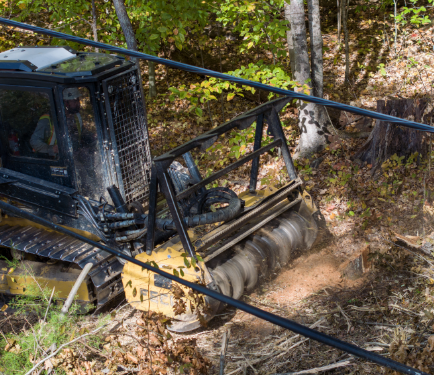
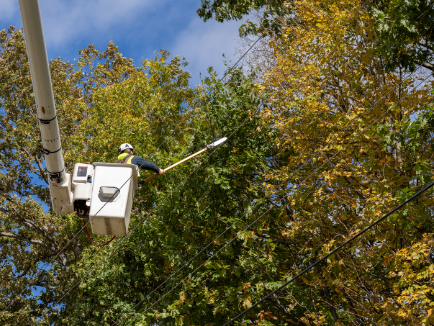
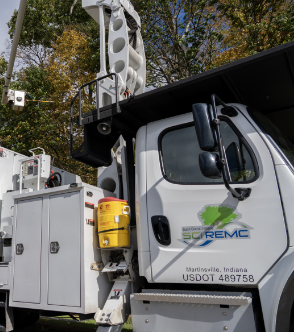
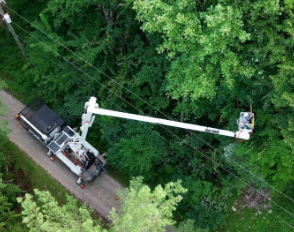
When our Vegetation Management team identifies vegetation on your property that requires attention, you will see a colored ribbon tied to it. These ribbons allow us to identify the work that will be performed.

Red
Trees that are to be removed

Green
Trees that are to be trimmed

Black/Yellow Striped
Dead/danger trees to be “made safe” or agreed upon, member requested, removals

Please do not remove any identification ribbons that may be placed on your trees or bushes until crews have completed the necessary work.

Stump Removal is not part of the tree removal process

Stumps will be cut as close to the ground as permitted by conditions and property owner agreements
SCI has several certified employees:
21
Pesticide Registered Technicians
(RT)
9
Licensed Industrial Weed management Applicators
(Category 6)
1
Licensed Aquatic Pesticide Applicators
(Category 5)
5
ISA Internationally Certified Utility Arborist
(Less than 30 in Indiana)
7
ISA Internationally Certified Arborist
(Around 200 in Indiana)
2
ISA Qualified Tree Risk-Assessors

